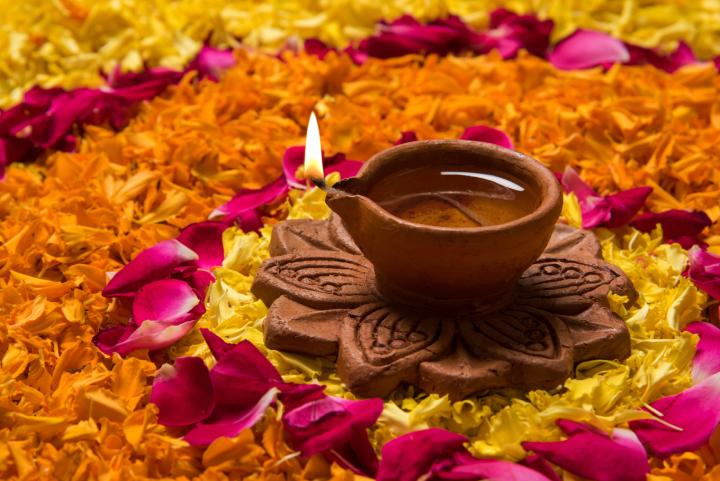
Kartika Purnima, also known as Dev Deepavali, marks one of the most sacred full-moon days in the Hindu calendar. Celebrated in the holy month of Kartika (November–December), this day is dedicated to Lord Vishnu, Goddess Lakṣmī, and Lord Śiva.
Lighting lamps (Deepa Dāna), taking a holy bath (Snāna), and chanting divine mantras are believed to purify the soul and attract immense spiritual merit (Punya).
Here are five powerful mantras to recite during Kartika Purnima — each chosen for its traditional significance, Sanskrit authenticity (IAST), and modern spiritual relevance.
1. Lakṣmī Beej Mantra – For Prosperity and Fearlessness
ॐ ह्रीं श्रीं लक्ष्मीभयो नमः ॥
Om Hreem Shreem Lakshmibhayo Namah
Meaning: Salutations to Goddess Lakṣmī, who removes fear and blesses her devotees with wealth, grace, and serenity
How to Recite
Best Time: Evening of Kartika Purnima after lighting lamps.
Count: 108 times using a crystal or lotus-seed mālā.
Direction: Face East; offer white flowers and light a ghee lamp.
Benefits
Attracts abundance and financial stability.
Removes fear, stress, and insecurity.
Enhances peace and positive aura at home.
2. Mahā Lakṣmī Mantra – For Divine Grace and Complete Abundance
ॐ श्रीं ह्रीं श्रीं कमले कमलालये प्रसीद प्रसीद ।
ॐ श्रीं ह्रीं श्रीं महालक्ष्म्यै नमः ॥
Om Shreem Hreem Shreem Kamale Kamalalaye Praseeda Praseeda Om Shreem Hreem Shreem Mahalakshmyai Namah
Meaning: “O Goddess Mahalakṣmī, seated on the divine lotus, please be pleased with me and shower your blessings of fortune and joy.”
How to Recite
When: After sunset, facing a lit lamp.
Count: 11, 27 or 108 times.
Offer: Light 11 ghee lamps and offer fragrant flowers.
Benefits
Invokes the full energy of Mahā Lakṣmī.
Increases prosperity, peace, and family happiness.
Removes debts and obstacles in career or business.
3. Viṣṇu-Patnī Gāyatrī Mantra – For Harmony and Divine Wisdom
ॐ श्रीमहालक्ष्म्यै च विद्महे विष्णुपत्न्यै च धीमहि ।
तन्नो लक्ष्मीः प्रचोदयात् ॥
Om Shree Mahalakshmyai Cha Vidmahe Vishnu Patnyai Cha Dheemahi Tanno Lakshmi Prachodayat
Meaning
“We meditate on the great Goddess Lakṣmī, the consort of Viṣṇu; may she guide our thoughts and bless us with divine wisdom.”
How to Recite
When: Early morning before sunrise, during the Kartika Snāna (holy bath).
Count: 11 or 21 times.
Offer: Tulasi leaves or yellow flowers to both Viṣṇu and Lakṣmī.
Benefits
Brings peace and mutual understanding within families.
Enhances intuition and inner guidance.
Strengthens devotion to the divine couple Lakṣmī-Viṣṇu.
4. Viṣṇu Snāna Mantra – For Purification and Liberation
दुःखदरिद्र्यनाशाय श्रीविश्णोस्तोषणाय च ।
प्रातःस्नानं करोम्यद्य कार्तिके पापविनाशनम् ॥
Duhkhadaridrya-nāśāya Shree Vishnostoṣaṇāya Cha |
Prātaḥ Snānam Karomyadya Kārtike Pāpavināśanam ||
Meaning
“For the destruction of sorrow and poverty, and to please Lord Viṣṇu, I perform this holy bath in Kartika month which removes all sins.”
How to Recite
When: Before sunrise on Kartika Purnima.
How: Face East, sprinkle water three times over your head while chanting.
Note: Can be done at home with clean water if unable to visit a river.
Benefits
Purifies body, mind, and soul.
Washes away negative karma.
Brings merit equivalent to bathing in sacred rivers like Ganga or Yamuna.
5. Śiva Pūjā Mantra – For Peace and Protection (Tripurari Purnima)
ॐ नमः शिवाय ॥
Om Namah Shivaya
Meaning
“I bow to Lord Śiva, the auspicious one who grants liberation and dissolves all negativity.”
How to Recite
When: During night or evening prayers on Kartika Purnima.
Count: 108 times with a Rudrākṣa mālā.
Offer: Bilva (bael) leaves, water, and sandal paste on a Śiva Liṅga or image.
Benefits
Removes fear, ego, and inner turmoil.
Brings peace of mind and spiritual awakening.
Symbolizes victory of good over evil (Tripurāsura Vijaya).